Key takeaways
- Nothing in the Village needs a ticket: the streets, Washington Square Park (open 6 am to midnight), the Stonewall National Monument Visitor Center and the pavement outside 90 Bedford Street are free. What a guided walk adds is set out on what a tour costs.
- The Village ignores Manhattan’s grid: it was already built when the Commissioners’ Plan of 1811 numbered the island, so West 4th Street runs north-south here and crosses West 10th, 11th and 12th. Why, on the street grid.
- Six guided walks, one neighbourhood: a 2-hour history walk, a 3-hour walk on into SoHo, Little Italy and Chinatown, two food walks with six tastings each, a ghost walk after dark and a 3-mile rock and roll walk. Side by side on all tours.
- Four of the six cross Washington Square Park, a former potter’s field of 1797 to 1825 with an English elm over 300 years old in its north-west corner. The park’s history is on Washington Square Park.
- Pay-what-you-wish walks exist, run by New York companies on a tip-based model that GetYourGuide does not sell. How they work, and what a booked walk adds, on free walking tours.
- This is not Greenwich, London: the Royal Observatory, the Prime Meridian and Greenwich Market are about 3,500 miles away. The two places are told apart on not Greenwich, London.
What every Village walk shares, and what differs
All six walks are on foot, led by a live guide, and all six can be cancelled free of charge up to 24 hours before the start. Beyond that the listings diverge: one is guided in five languages, two exclude wheelchair users, one runs after dark and one covers about 3 miles. This is what is common to all of them and where they part.
On every walk
- A live guide on foot, for 2 to 3 hours, through streets that need no ticket
- Washington Square Park on four of the six routes; the Brown Building and the Stonewall Inn on the history walk and the ghost walk
- Comfortable shoes and layers in spring and autumn; the walks run in most weather
- Free cancellation up to 24 hours before, for a full refund; start times show in the calendar of the booking widget
Where they differ
- Duration: 2 hours (history, ghost), 2.5 hours (food), 3 hours (four neighbourhoods, six tastings, rock and roll)
- Group cap: 10 on the history and ghost walks, 6 on the rock and roll walk, up to 8 on the semi-private option of the four-neighbourhood walk; not stated on the food walks
- Language: English on five; English, Spanish, Italian, French or German on the four-neighbourhood walk
- Accessibility: the history walk and the first food walk state that they are wheelchair accessible; the six-tastings food walk and the rock and roll walk exclude wheelchair users; the ghost walk and the four-neighbourhood walk do not say
What a Village walk sees, in order
The guided walks and the self-guided route pass the same places. Listed from Washington Square westward, these are the stops that recur across the listings, with the reason each one is on the route.
Washington Square to the Stonewall Inn is about half a mile, 10 minutes on foot without stops; Washington Square to the Hudson River about a mile. A guided walk spends 2 to 3 hours on roughly this ground because the guide stops and talks. The streets between the stops keep their pre-1811 pattern, which is why the order below is easier to follow than to improvise.
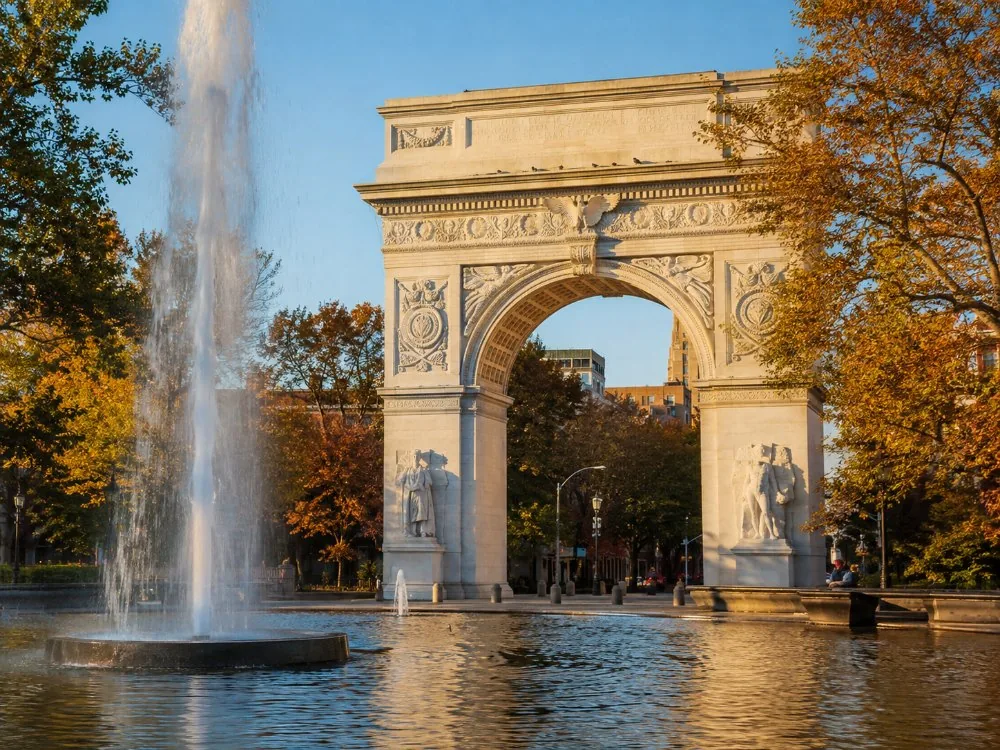
- Washington Square Arch — A temporary wood-and-plaster arch went up in 1889 for the centennial of Washington’s inauguration; Stanford White’s permanent marble arch followed in 1892, 77 feet tall, modelled on the Arc de Triomphe. The fountain was moved into line with it during the 2007–2014 renovation.
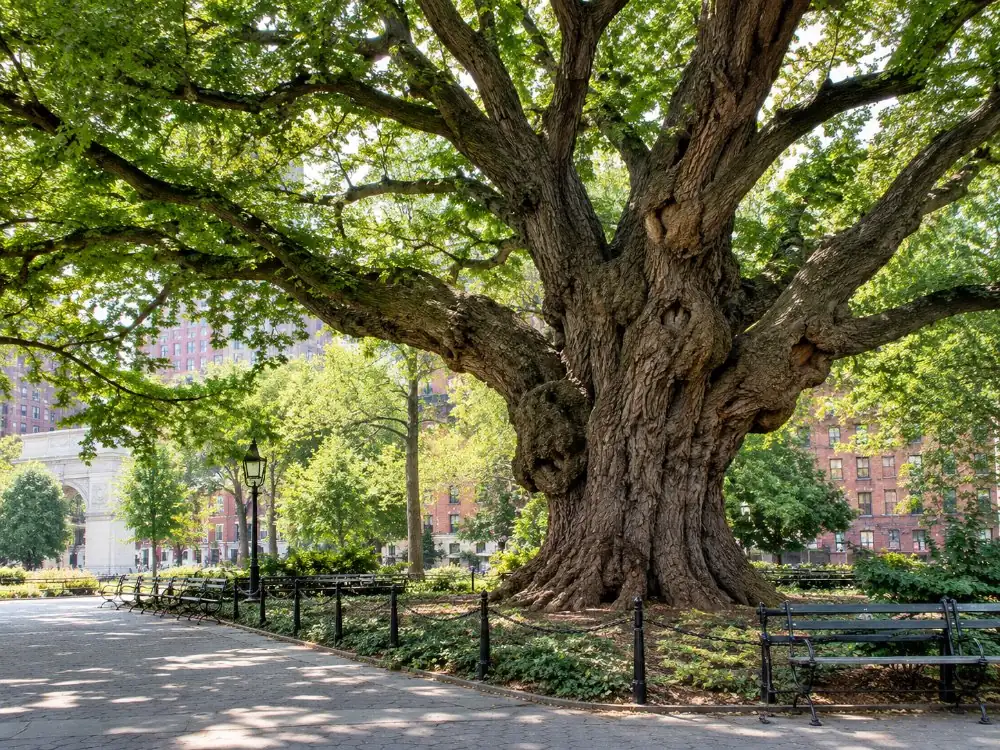
- The Hangman’s Elm — An English elm in the park’s north-west corner, estimated at over 300 years old and among the oldest trees in Manhattan. The park was a potter’s field from 1797 to 1825, with an estimated 10,000 to 22,000 burials still beneath it; the hanging stories are legend.
- The Brown Building — 23–29 Washington Place, built 1901, now NYU. On 25 March 1911 fire broke out on the 8th floor of the Triangle Waist Company; 146 died, mostly immigrant women and girls aged 14 to 23, behind locked exit doors. 38 New York labour laws followed in 1911–1913.
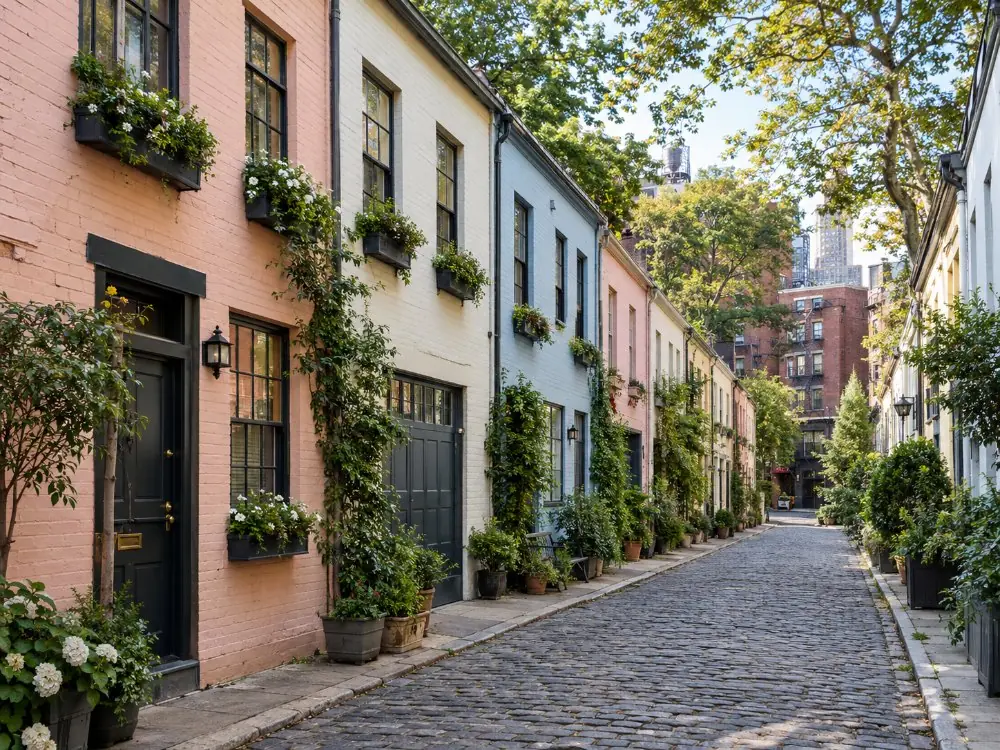
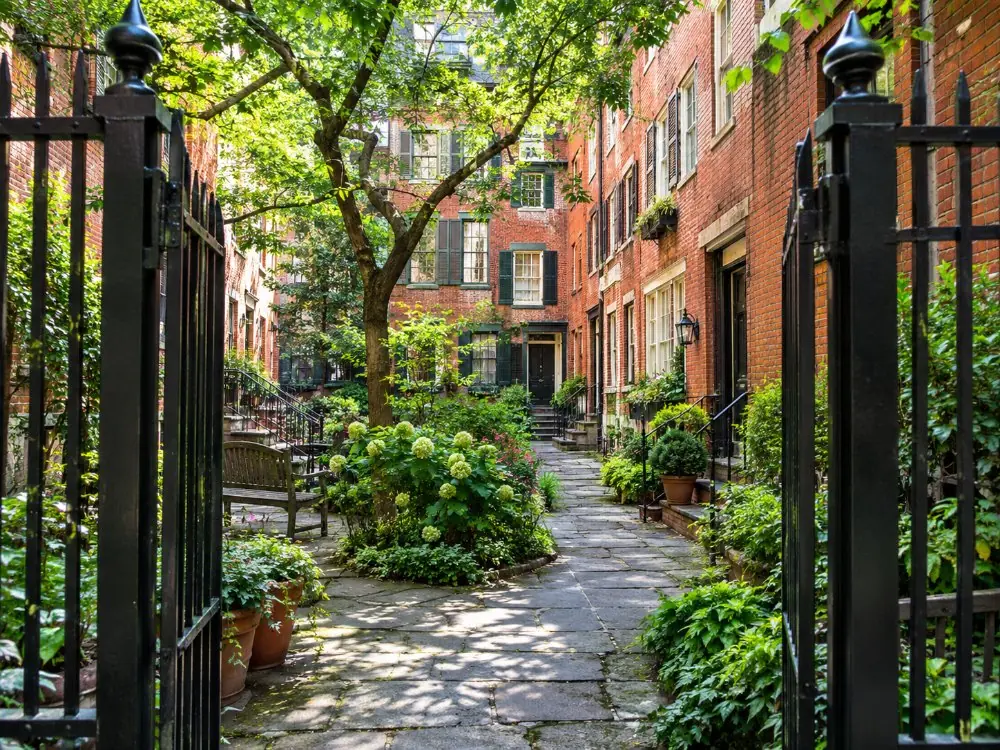
- Washington Mews — A cobbled private lane north of Washington Square North, between Fifth Avenue and University Place: former stables and carriage houses, now NYU. The gates are open in daytime.
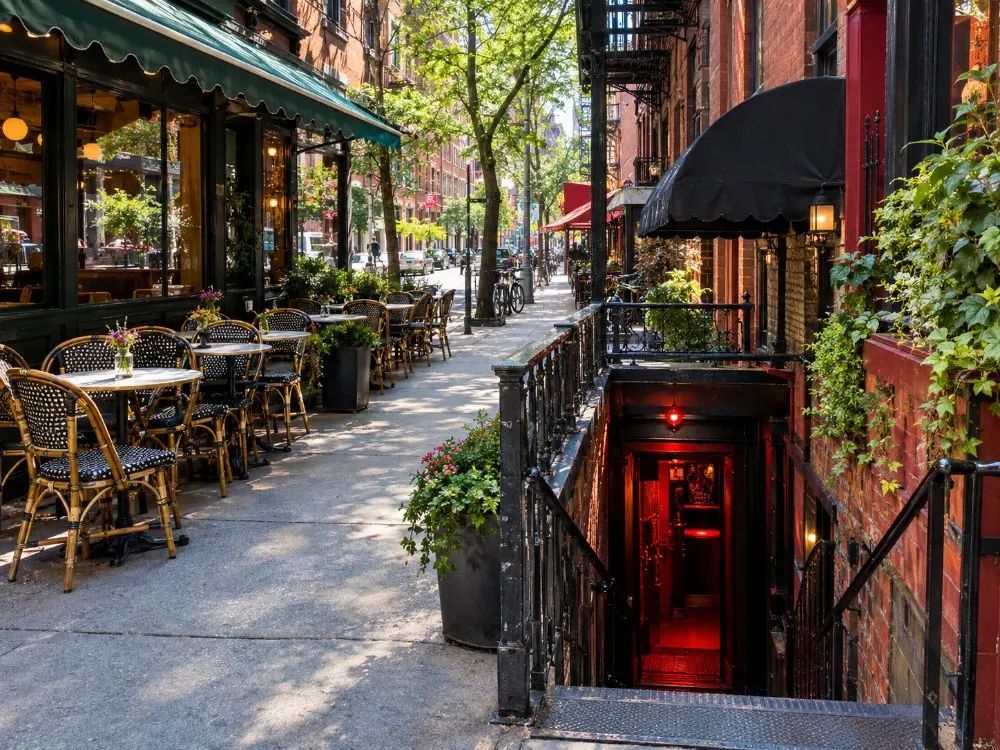
- MacDougal Street — Cafe Wha? at number 115, the basement club where Bob Dylan played soon after arriving in January 1961 and Jimi Hendrix played in 1966; Caffe Reggio at 119, open since 1927 with a 1902 espresso machine on display; the Comedy Cellar at 117; Mamoun’s falafel, since 1971.
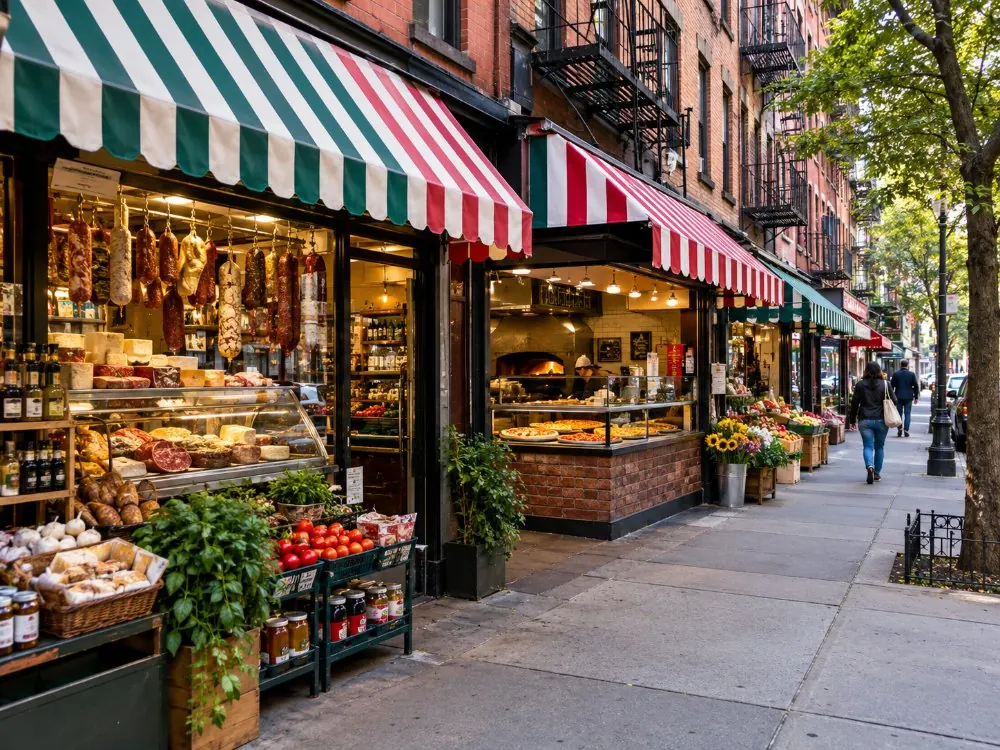
- Bleecker Street — The Bitter End at 147, still open from the 1960s folk years; Faicco’s Italian deli, since 1900; Murray’s Cheese at 254, since 1940; John’s of Bleecker Street, coal oven since 1929. Both food walks stop along here for a slice.
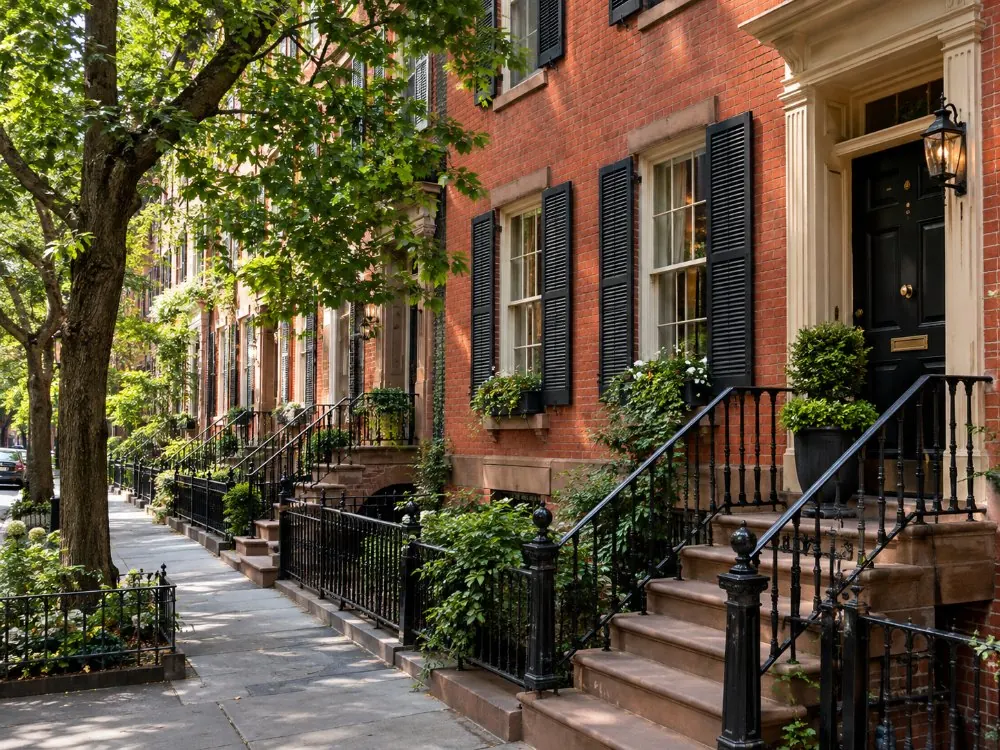
- Bedford Street — 75½ Bedford, the narrowest house in Manhattan at 9 ft 6 in wide, built 1873, where Edna St. Vincent Millay lived in 1923–24; 77 Bedford, the Isaacs-Hendricks House of 1799, the Village’s oldest; 90 Bedford at Grove Street, the “Friends” exterior; Chumley’s speakeasy at 86, behind an unmarked door.
- Christopher Street and the Stonewall Inn — 53 Christopher Street, raided at about 1:20 am on 28 June 1969. National Historic Landmark in 2000, the first city landmark designated for LGBTQ history in 2015, and since 24 June 2016 the Stonewall National Monument, which covers Christopher Park opposite. The visitor center at number 51 opened on 28 June 2024 and is free.
- Gay Street — A one-block curved street between Christopher Street and Waverly Place. The name is an 18th-century surname, older than the modern sense of the word; number 12 carries a former mayor’s ghost legend on the ghost walk.
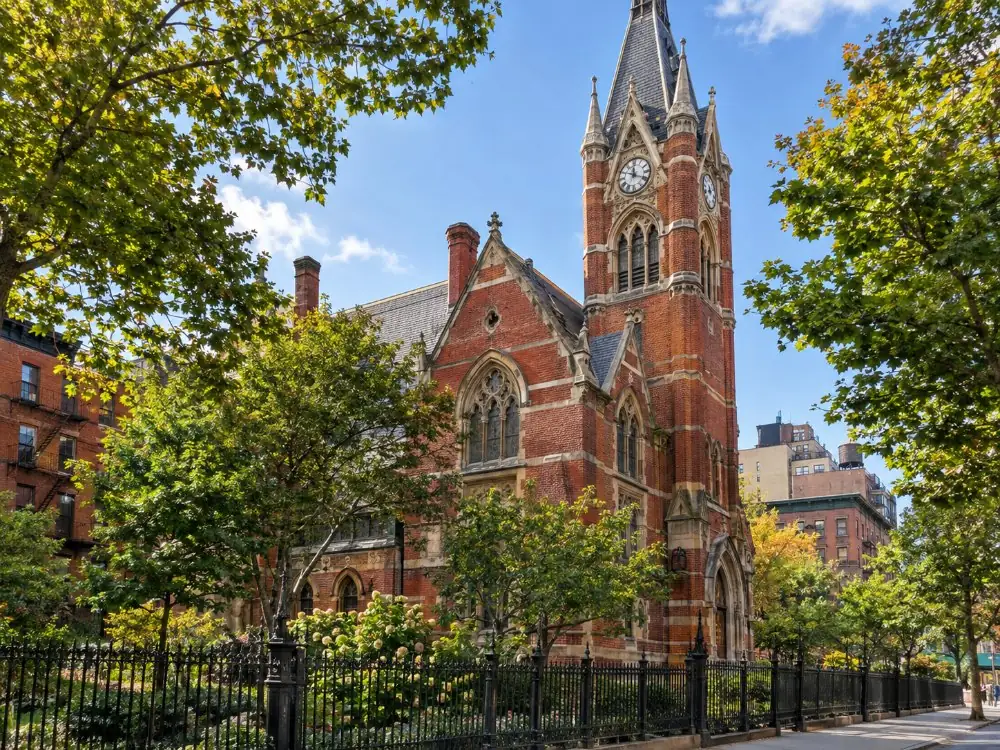
- Jefferson Market Library — Sixth Avenue at West 10th Street: a Victorian Gothic courthouse of 1877 by Vaux & Withers, with a clock tower. Mae West was tried in its women’s court in 1927; residents saved it from demolition and it reopened as a public library in 1967.
The same ground as a complete, ordered route with distances and the subway in and out is on the self-guided walk. Why the streets between these stops cross at odd angles is explained on the street grid.
How booking works
Choose the lens
History, four neighbourhoods, food, ghosts or music. All six walk the same neighbourhood; the choice is about what the guide points at, how long the walk lasts and how far it goes. Duration, group cap and accessibility are on each card below.
Pick a date
The widget below shows live availability from GetYourGuide. No walk publishes a fixed start time; the calendar shows what is open on a given day. The four-neighbourhood walk is booked by language.
Book
Every one of the six walks has free cancellation up to 24 hours before the start for a full refund. Two of them offer reserve now, pay later.
Go to the meeting point
Each listing names its own start: a diner, a bagel shop, a cinema entrance, a street number or a statue. Bring the confirmation on a phone, wear shoes for 2 to 3 hours on pavement, and for the food walks arrive hungry.
Check dates for the Greenwich Village Tour
The 2-hour history walk in groups of up to 10, in English, meeting in front of the Waverly Diner at the corner of 6th Avenue and Waverly Place. It passes the Edgar Allan Poe house, Washington Square Park, the Brown Building, the MacDougal Street venues and the Stonewall Inn, and is wheelchair accessible. Pick a date and live availability appears here; the current price shows in the widget.
Three Greenwich Village walks, side by side
The general history walk, the food walk with six tastings and the ghost walk after dark, one column each. Short phrases only; the detail is on each walk’s own page, and all six are compared on the tours page.
| The general walkGreenwich Village Tour | NYC: Greenwich Village Food Tour | Greenwich Village Ghost Tour | |
|---|---|---|---|
| Duration | 2 hours | 2.5 hours | 2 hours |
| Group cap | Up to 10 | Not stated in the listing | Up to 10 |
| Language | English | English | English |
| Start point | Waverly Diner, 6th Avenue and Waverly Place | Bagel Bob’s, University Place | 385 6th Avenue |
| Time of day | See the calendar | See the calendar | After dark |
| Accessibility | Wheelchair accessible | Stroller and wheelchair accessible | Not stated |
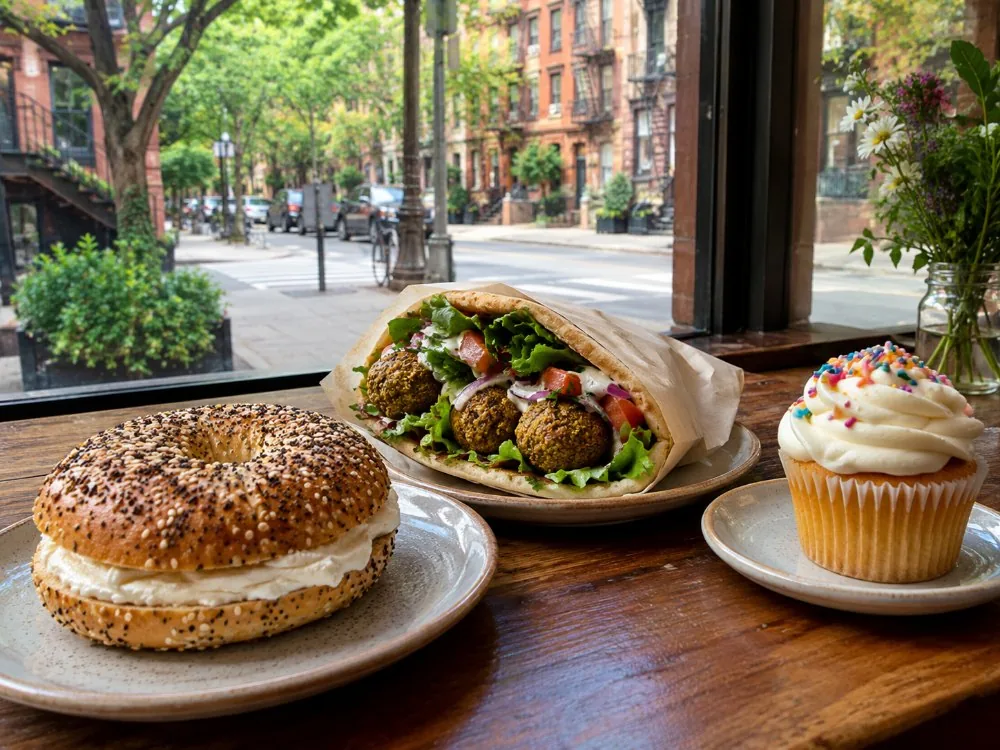
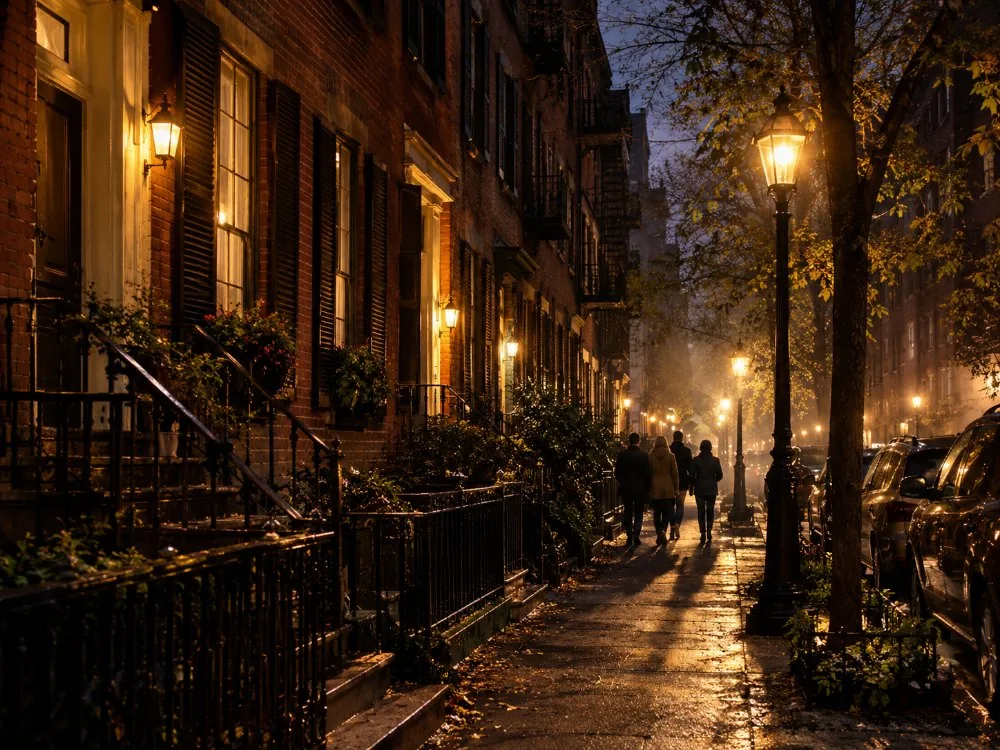
| Lens | Poe, the park, the 1911 fire, Stonewall | Bagel, falafel, pizza, tacos, Italian, cupcake | Legends from the Hangman’s Elm to Chumley’s |
| Book this | Book this | Book this |
The general walkGreenwich Village Tour
- Duration
- 2 hours
- Group cap
- Up to 10
- Language
- English
- Start point
- Waverly Diner, 6th Avenue and Waverly Place
- Time of day
- See the calendar
- Accessibility
- Wheelchair accessible
- Lens
- Poe, the park, the 1911 fire, Stonewall
NYC: Greenwich Village Food Tour
- Duration
- 2.5 hours
- Group cap
- Not stated in the listing
- Language
- English
- Start point
- Bagel Bob’s, University Place
- Time of day
- See the calendar
- Accessibility
- Stroller and wheelchair accessible
- Lens
- Bagel, falafel, pizza, tacos, Italian, cupcake
Greenwich Village Ghost Tour
- Duration
- 2 hours
- Group cap
- Up to 10
- Language
- English
- Start point
- 385 6th Avenue
- Time of day
- After dark
- Accessibility
- Not stated
- Lens
- Legends from the Hangman’s Elm to Chumley’s
Photo gallery
Greenwich Village in nine photos
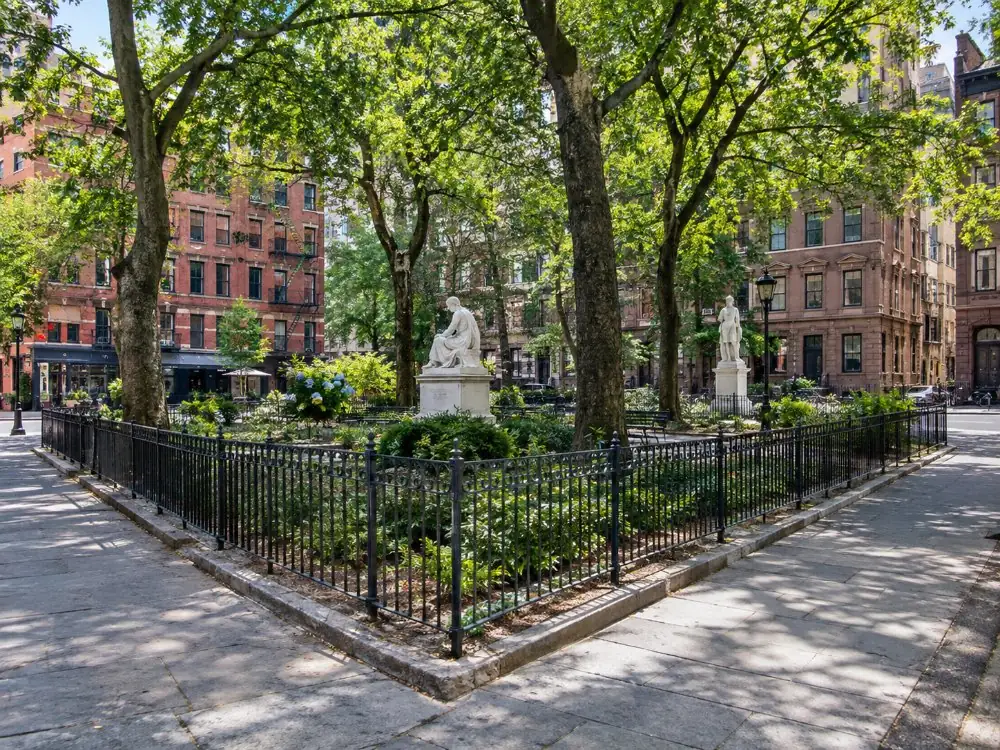
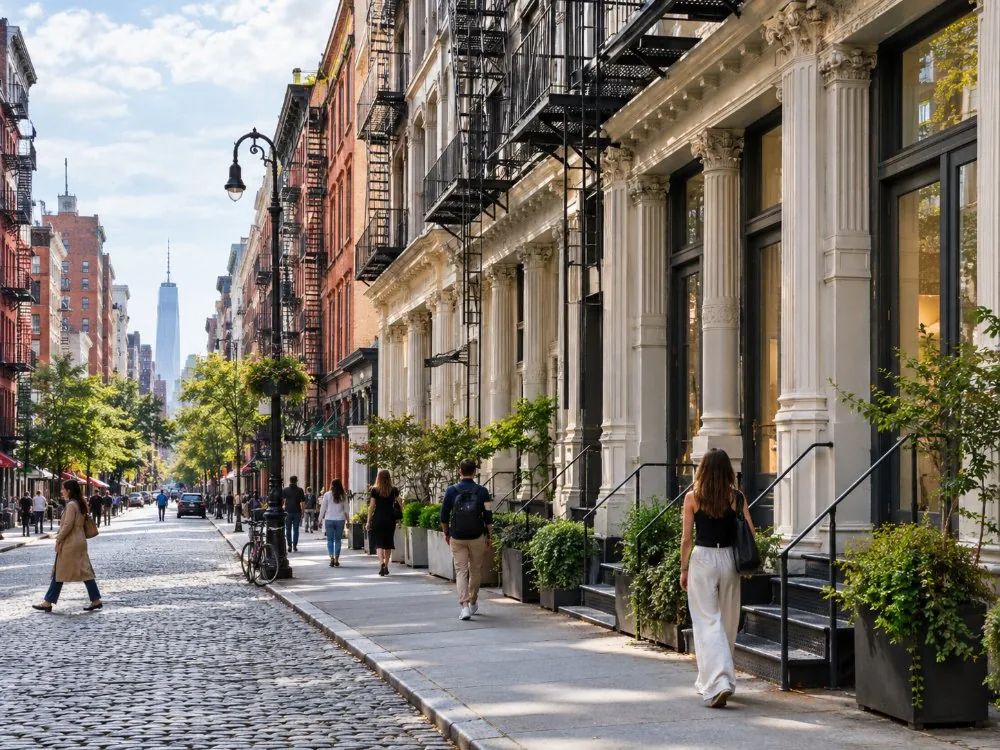
The arch and the elm in Washington Square, the row houses of Bedford Street, the cafes of MacDougal, the clock tower on Sixth Avenue, Christopher Park, Bleecker Street, the mews and Grove Court.
The six Greenwich Village walks
Two general walks, two food walks and two themed walks, all on foot and all with free cancellation up to 24 hours before. Every card links to the live GetYourGuide listing, where the current price and the calendar appear.
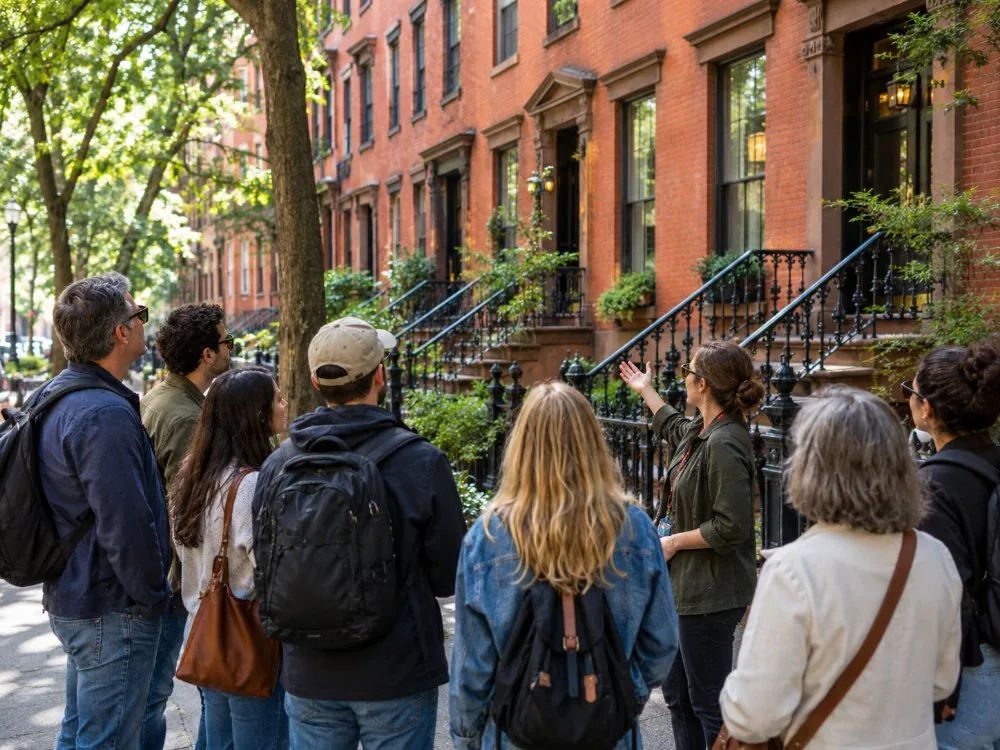 History walk
Greenwich Village Tour
 Five
languages
Five
languagesNYC: Greenwich, SoHo, Little Italy and Chinatown Tour
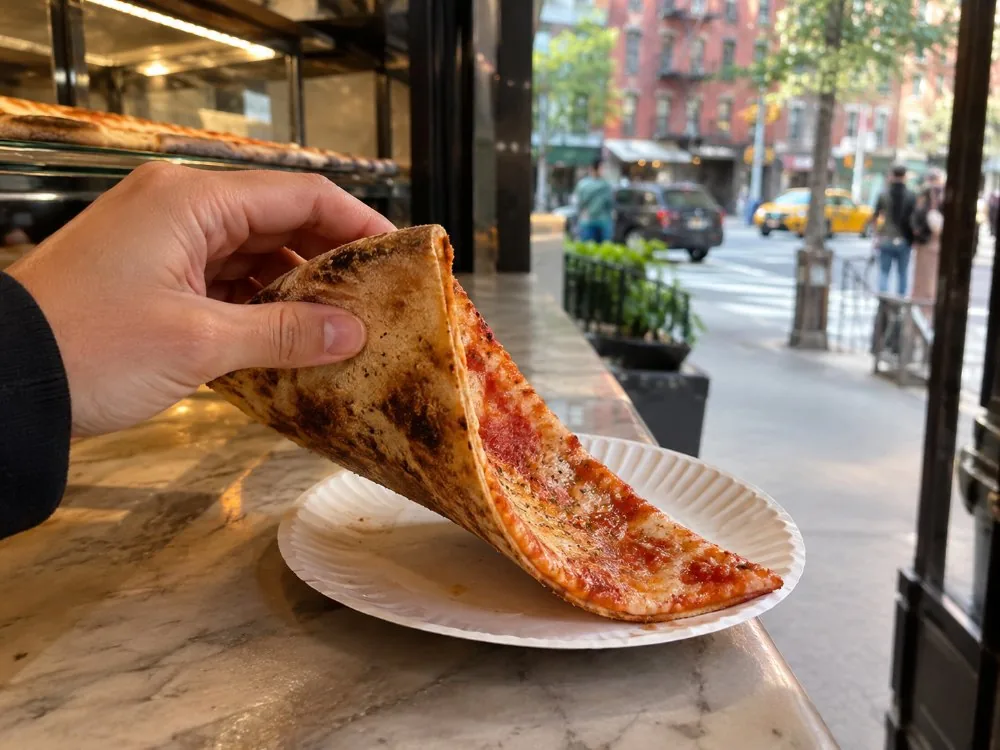 Six tastings
NYC: Greenwich Village Food Tour
 Secret
dish
Secret
dishNYC: Greenwich Village Food Tour with 6 Authentic Tastings
 After dark
Greenwich Village Ghost Tour
 Max
6 people
Max
6 peopleNew York: Rock and Roll History Tour with Dylan & Ramones
What travellers mention afterwards
Short lines from travellers who booked these walks, with the walk each one took.
2 hours just about right to see Greenwich village.
Like a walk through town with an old friend.
Very good combo of food and visiting historic/famous buildings.
Places whose significance is no longer apparent.
Snippets from travellers who booked through GetYourGuide. Read the six walks, close up ›
Quick answers before booking
Four short answers to common questions, with links to the full pages.
Is there a free walking tour of Greenwich Village?
Several New York companies run pay-what-you-wish walks of the Village, in which the guide is paid by tips at the end. GetYourGuide does not sell them, and this site earns nothing from them. A self-guided route of about 1.5 miles takes 90 to 120 minutes. Both are explained on free walking tours.
Which subway goes to Greenwich Village?
West 4th Street–Washington Square (A, C, E, B, D, F, M) is the central station; Christopher Street–Stonewall on the 1 and 8th Street–NYU on the R and W are the others inside the neighbourhood, with the 14th Street stations along the northern edge. PATH from New Jersey stops at Christopher Street and 9th Street. Lines and buses on how to get there.
Greenwich Village or West Village?
The West Village is the part of Greenwich Village west of Seventh Avenue (some say Sixth), running to the Hudson. The East Village, east of Broadway and the Bowery, has never been considered part of Greenwich Village. The boundaries are drawn on Greenwich Village vs West Village.
Is this the Greenwich with the Royal Observatory?
No. That Greenwich is in London, about 3,500 miles away, with the Prime Meridian and Greenwich Market; trains from central London go there. Nothing on this site concerns it. The two are told apart on not Greenwich, London.
Other dates and options
More Greenwich Village walking tours with live availability, for dates when the walks above are full.
Greenwich Village, explained
Greenwich Village is a residential district of lower Manhattan, about 0.75 square kilometres between West 14th Street, Houston Street, Broadway and the Hudson River, whose 18th-century street pattern predates the city’s 1811 grid and whose history runs from a Lenape tobacco field to the Stonewall uprising of 1969.
Why West 4th Street crosses West 10th
The name comes from the Dutch Groenwijck, “green district”, first recorded as “Greenwich” in 1696. The yellow fever epidemic of 1822 sent New Yorkers up here in numbers, and many stayed. By then the Commissioners’ Plan of 1811 had already drawn numbered streets over Manhattan, yet the Village had roads and houses of its own, so the plan was never forced through. The old lanes were given numbers instead: Asylum Street, named for an orphan asylum between Bank and Troy Streets, became part of West 4th; Amos Street became West 10th, Hammond Street West 11th, Troy Street West 12th. The result is a West 4th Street that runs north-south and meets three streets that, on paper, lie several blocks to its north. The full explanation is on the street grid.
Washington Square Park
The 9.75-acre park at the foot of Fifth Avenue sits where Minetta Creek once ran. Between 1797 and 1825 the ground was the city’s potter’s field. Henry James was born nearby at 21 Washington Place in 1843, and Edward Hopper lived at 3 Washington Square North from 1913 until 1967. In the 1950s Robert Moses planned to run Fifth Avenue straight through; Shirley Hayes and her neighbours opposed it, and by August 1959 the park was closed to traffic altogether.
Three eras: writers, folk singers, Stonewall
The first wave was literary. Edgar Allan Poe lived at 85 West 3rd Street in 1845, Mark Twain on West 10th Street in 1900; the Village later drew Willa Cather, Djuna Barnes, E. E. Cummings in Patchin Place and Edna St. Vincent Millay, who lived at 75½ Bedford Street.
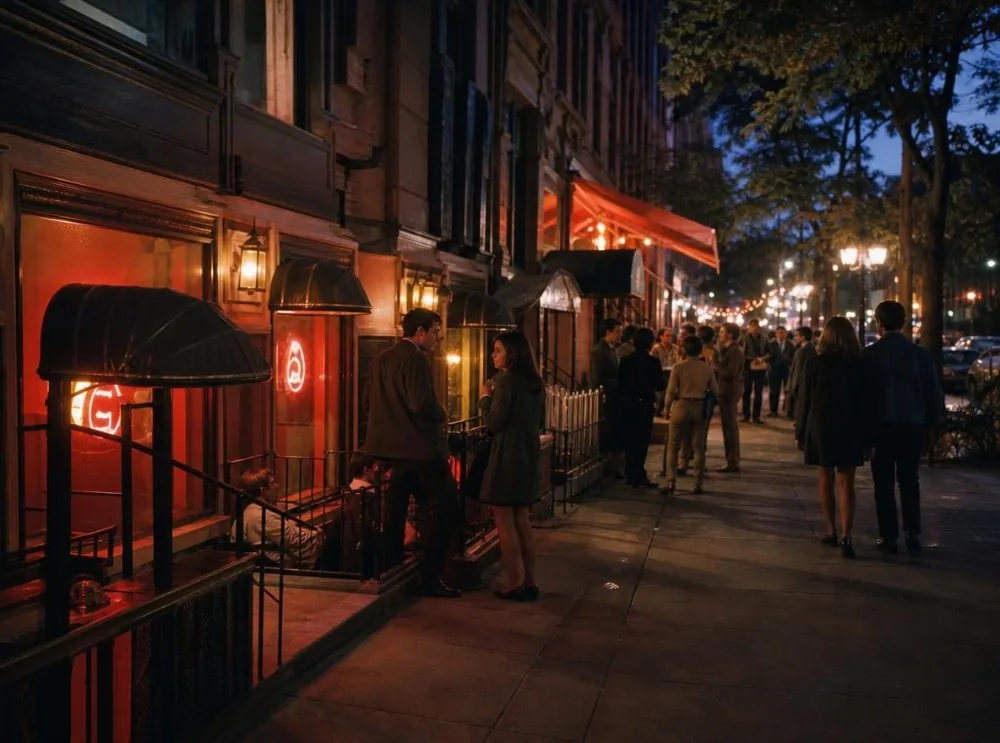
The second wave was musical. In the 1950s and 1960s the coffeehouses and basements of MacDougal and Bleecker Streets, among them Gerde’s Folk City, The Gaslight Cafe and Cafe Au Go Go, were the rooms of the folk scene. On 9 April 1961 the parks commissioner refused permits for the Sunday singing in Washington Square, and the gathering ended in arrests, remembered as the “Beatnik Riot”. Bob Dylan’s first New York apartment was at 161 West 4th Street.
The third turn came at about 1:20 am on 28 June 1969, when a police raid on the Stonewall Inn at 53 Christopher Street set off six days of protest. The inn is a National Historic Landmark, Christopher Park opposite became the first US national monument to LGBTQ rights in 2016, and the bar still operates; details on the Stonewall Inn.
The Historic District of 1969
In the same year as the uprising, the city designated the Greenwich Village Historic District, more than 50 blocks of row houses, churches and lanes, entered on the National Register on 19 June 1979 and extended in 2006 and 2010. In 2014 all four Village ZIP codes ranked among the ten most expensive in the country by median housing value. The bohemian population has long since moved on, to SoHo, Tribeca, Dumbo and Williamsburg.
Six guided walks: the common ground and the differences
Every walk sold on GetYourGuide for the Village is on foot, led by a live guide and cancellable free of charge up to 24 hours ahead. The routes overlap heavily: four of them cross Washington Square Park, and the history walk and the ghost walk both stop at the Brown Building and the Stonewall Inn. What changes is the lens and the terms. The history walk and the ghost walk last 2 hours with a cap of 10, the ghost walk after dark. The food walks run 2.5 and 3 hours and share a bagel, a falafel, a pizza slice and a cupcake. The rock and roll walk covers about 3 miles in 3 hours with no more than 6 people, starting in the East Village. The four-neighbourhood walk continues into SoHo, NoLiTa, Little Italy and Chinatown and is the only one guided in Spanish, Italian, French or German as well as English. On access, the history walk and the first food walk state that they take wheelchairs, the six-tastings food walk and the rock and roll walk exclude them, and the other two say nothing. A full table is on all six walks.
Without a booking
Several New York companies run pay-what-you-wish walks of the Village, where the guide is paid in tips at the end; GetYourGuide does not sell these, and free walking tours explains the model. A published self-guided route of about 1.5 miles takes 90 to 120 minutes; an ordered version from Washington Square to the White Horse Tavern is on the self-guided walk.
Practicalities
West 4th Street–Washington Square, served by the A, C, E, B, D, F and M trains, is the central station; the 1 train stops at Christopher Street–Stonewall, and PATH trains from New Jersey stop at Christopher Street and 9th Street. Routes from the airports and the main stations are on how to get there. A guided walk means 2 to 3 hours on pavement, so comfortable shoes are the one requirement every listing shares. Late April to June and September to October are the mildest months; July and August are hot and humid, January and February cold, and the walks run in most weather.
Frequently asked questions
Is it worth visiting Greenwich Village?
The neighbourhood is public streets, so a visit costs nothing unless a walk or a meal is booked. In about 0.29 square miles it holds Washington Square Park, the Brown Building of the 1911 fire, the Stonewall Inn and its national monument, the folk clubs of MacDougal Street, the narrowest house in Manhattan and the “Friends” building. A guided walk takes 2 to 3 hours; the self-guided route 90 to 120 minutes. What there is and how long it takes are set out on is it worth visiting.
Is there a free walking tour of Greenwich Village?
Yes, in the pay-what-you-wish sense: several New York companies run walks of the Village in which the guide is paid by tips at the end. GetYourGuide does not sell them. The six booked walks on this site add a fixed group cap, a fixed route and, on one of them, a choice of five languages. The model is explained on free walking tours, and a route to walk alone is on the self-guided walk.
How do I get to Greenwich Village?
By subway to West 4th Street–Washington Square (A, C, E, B, D, F, M), Christopher Street–Stonewall (1) or 8th Street–NYU (R, W). From Penn Station the 1 train is two stops to 14th Street or three to Christopher Street; from Grand Central the 4, 5 or 6 to Union Square, then the L one stop to 6th Avenue. PATH trains from New Jersey stop at Christopher Street and 9th Street. Every route is on how to get there.
What is the difference between Greenwich Village and the West Village?
The West Village is part of Greenwich Village: the section west of Seventh Avenue, or Sixth by some accounts, with the Far West Village running from Hudson Street to the river. Greenwich Village as a whole runs from West 14th Street to Houston Street and from Broadway to the Hudson. The East Village, beyond Broadway and the Bowery, is a separate neighbourhood. The map is on Greenwich Village vs West Village.
What are the main attractions in Greenwich Village?
Washington Square Park and its arch of 1892; the Brown Building, where 146 died in the Triangle fire of 1911; the Stonewall Inn and the Stonewall National Monument Visitor Center; Cafe Wha? and Caffe Reggio on MacDougal Street; Jefferson Market Library; 75½ Bedford Street, the narrowest house in Manhattan; 90 Bedford Street, the “Friends” exterior; the White Horse Tavern, open since 1880. One factual line on each is on things to see.
How far is Greenwich Village from Times Square?
About 2 miles (3 km) south: 35 to 45 minutes on foot straight down Seventh Avenue or Broadway. The 1 train from Times Square–42nd Street to Christopher Street–Stonewall is five stops; the A, C or E from 42nd Street–Port Authority to West 4th Street is three. Either ride takes around 10 minutes plus the walk to the platform. Options are compared on how far from Times Square.
Why is Greenwich Village so famous?
For its street pattern, which predates the 1811 grid; for Washington Square Park and the 1961 folk-singer arrests there; for the Triangle fire of 1911 and the labour laws that followed; for the folk clubs where Bob Dylan and Jimi Hendrix started; for the Stonewall uprising of June 1969; and for the writers and painters who lived here, from Poe and Henry James to Edward Hopper and Jane Jacobs. The chronology from the Lenape to the landmark district is on why the Village is famous.
What are some popular walking tours in Greenwich Village?
Six are sold on GetYourGuide: a 2-hour history walk in groups of up to 10; a 3-hour walk through Greenwich Village, SoHo, NoLiTa, Little Italy and Chinatown in one of five languages; two food walks of 2.5 and 3 hours with six tastings each; a 2-hour ghost walk after dark; and a 3-hour, 3-mile rock and roll walk capped at 6 people. They are compared on all tours, and the choice by time, interest and mobility is on which tour.
Questions or corrections: [email protected]